


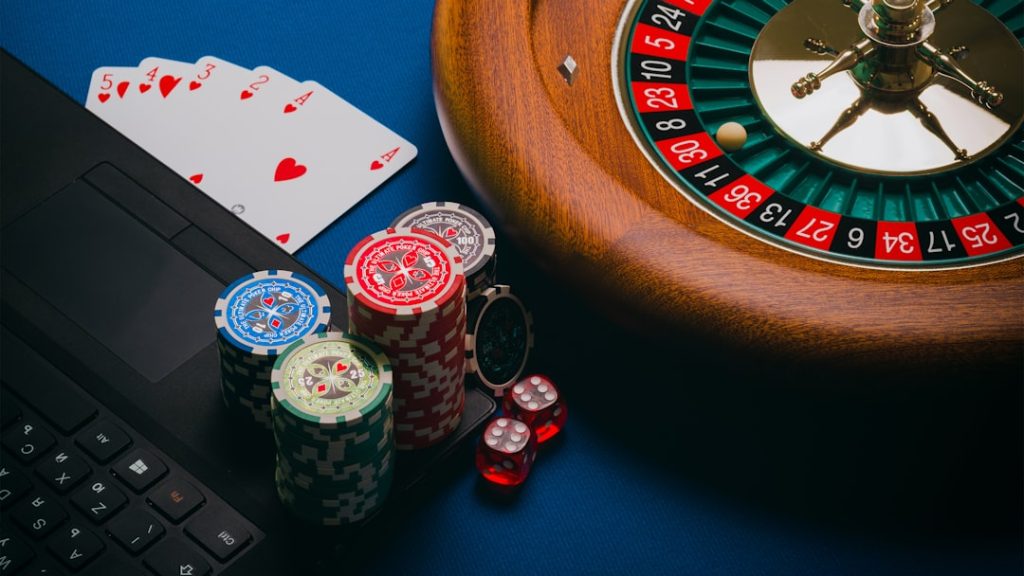
In 1655, Blaise Pascal was hunting perpetual motion in his Parisian lab when he accidentally invented perpetual profit instead. His balanced wheel experiment—designed to spin forever without stopping—failed spectacularly at physics but succeeded brilliantly at something else entirely: creating roulette, the “Devil’s Game” whose numbers sum to 666. Over the next 370 years, Pascal’s laboratory curiosity would travel from revolutionary Paris gaming rooms to Monte Carlo’s gilded halls, across the Atlantic to Mississippi riverboats, down the Vegas Strip, and finally onto your smartphone screen. This isn’t just gambling history—it’s a masterclass in how a single zero pocket can cost you double, why European wheels treat you better than American ones, and how a mathematician’s failure became the casino industry’s most elegant success story.
The Accidental Invention: Pascal’s Perpetual Motion Experiment (1655)
Blaise Pascal never intended to launch a gambling empire. In his cramped Parisian laboratory in 1655, the 32-year-old mathematical genius was chasing something far more ambitious: a machine that would spin forever without stopping. The perpetual motion device—a holy grail of physics that would later prove impossible—required a perfectly balanced wheel capable of continuous rotation without friction losses.
Pascal’s prototype featured a circular wheel divided into numbered compartments, each precisely weighted to maintain equilibrium. The wheel spun on a central axis with minimal resistance, incorporating a sophisticated understanding of probability distributions and mechanical balance that was centuries ahead of its time. He documented the wheel’s behavior meticulously, noting how a small ball placed on the spinning surface would eventually settle into one of the numbered pockets as momentum decreased.
The experiment failed. Physics wouldn’t allow perpetual motion—entropy always wins. But Pascal had inadvertently created something more enduring than any impossible machine: the fundamental architecture of roulette.
For 141 years, Pascal’s wheel remained a scientific curiosity, gathering dust in the footnotes of physics journals. French monks tinkered with similar designs. Italian scientists modified the concept. But it wasn’t until 1796 that someone looked at Pascal’s balanced wheel and saw dollar signs instead of differential equations. In the gaming rooms of the Palais Royal in Paris, the world’s first recognizable roulette table appeared—complete with the red and black color scheme, numbered pockets from 1 to 36, and that devilish house advantage that would make casinos rich.
Pascal died in 1662, never knowing his failure had birthed a legend.
The Birth of Modern Roulette in Revolutionary Paris (1796)
While the French Revolution was still sending shockwaves through Europe, a different kind of revolution was spinning into motion at the Palais Royal in Paris. In 1796, the first recognizable roulette wheel made its debut in these opulent gaming rooms, transforming Pascal’s mathematical curiosity into the casino staple we know today.
The Palais Royal Gaming Rooms
The Palais Royal wasn’t just any gambling hall. This former royal residence had become Paris’s most notorious entertainment district, where aristocrats who’d survived the guillotine rubbed shoulders with nouveau-riche merchants. The gaming rooms operated in a legal gray zone, protected by the Duke of Orléans himself. When the first roulette wheel appeared here, it featured both the single zero and double zero pockets—a configuration that would eventually split into two distinct traditions across continents. The wheel’s layout was deliberate: numbers 1 through 36 arranged in a precise alternating pattern of red and black, with the green zeros serving as the house’s mathematical edge.
The name “roulette” itself—meaning “little wheel” in French—captured the elegant simplicity that made it instantly popular. Unlike card games that required strategy or dice games that felt crude by comparison, roulette offered pure, spinning chance wrapped in sophisticated ceremony.
Why 666? The Devil’s Mathematics
Add up every number on a roulette wheel from 1 to 36, and you’ll hit exactly 666—the Biblical “number of the beast.” This wasn’t coincidental design by some occultist gambler. It’s simple arithmetic: the sum of all integers from 1 to 36 equals 666. Whether this mathematical quirk was noticed immediately or discovered later remains debated, but it certainly didn’t hurt the game’s mystique. French gamblers began calling roulette “The Devil’s Game,” a nickname that spread faster than winning streaks.
The early Palais Royal wheels gave birth to an entire vocabulary of betting—rouge ou noir, pair ou impair, manque ou passe—terms still whispered at tables from Monte Carlo to Macau. What started as Pascal’s failed perpetual motion machine had found its true calling: perpetual motion of an entirely different kind.
The Blanc Brothers’ Masterstroke: Creating European Roulette (1843)
François and Louis Blanc weren’t mathematicians or inventors. They were shrewd casino operators who understood something fundamental: in gambling, even a fractional advantage could shift the entire market. When they took over management of the Bad Homburg casino in 1843, every legitimate gambling house in Europe was offering the same product—roulette wheels with both a zero and double-zero, giving the house a hefty 5.26% edge. The Blanc brothers saw their opening.
The Competitive Casino Landscape of 1840s Germany
Bad Homburg sat in a crowded field. Monte Carlo hadn’t yet risen to prominence, but dozens of German spa towns competed viciously for wealthy tourists seeking thermal baths and gaming tables. Wiesbaden, Baden-Baden, and Spa itself all operated casinos with identical double-zero wheels. The Blancs needed differentiation, and they found it in subtraction. By removing just one pocket—the double-zero—they cut the house edge nearly in half, down to 2.7%. For players, this meant their money lasted longer. For the Blancs, it meant packed tables while competitors hemorrhaged customers.
The single-zero wheel became European roulette’s defining feature, a competitive moat built from thirty-seven pockets instead of thirty-eight. Within a decade, other casinos either adopted the single-zero format or shuttered their doors.
The Devil’s Deal: Myth vs. Marketing
The legend emerged almost immediately: François Blanc had sold his soul to Satan himself to learn roulette’s secrets. The evidence? Add every number on the wheel—1 through 36—and you get 666, the so-called Number of the Beast. Never mind that this property existed long before the Blancs touched a roulette wheel. The story was simply too delicious not to spread, and the brothers never bothered to deny it. Why would they? Mystery sells tickets, and “The Devil’s Game” packed more punch than “slightly better odds.”
Monte Carlo: Where Roulette Became Royalty (1863-1873)
François Blanc’s Monaco Gamble
When François Blanc arrived in Monaco in 1863, the principality was broke. Prince Charles III had one asset: a struggling casino perched on a Mediterranean cliff. Blanc, already wealthy from his Bad Homburg casino operation, saw opportunity where others saw risk. He brought his single-zero roulette wheel and transformed the Casino de Monte-Carlo into Europe’s gambling Mecca.
The mathematics were compelling. Blanc’s wheel offered a 2.7% house edge instead of the 5.26% players faced with double-zero wheels elsewhere. Word spread among Europe’s elite that Monaco gave better odds, and the wealthy came in droves. By the 1870s, over 300,000 visitors flooded this tiny principality annually. Blanc’s gamble paid off spectacularly—Monaco abolished income tax for its citizens in 1869, funded entirely by casino profits.
Joseph Jagger: The Engineer Who Beat the House
In 1873, a Yorkshire textile engineer named Joseph Jagger walked into the Monte Carlo Casino with a theory. Wheels were machines, and machines had imperfections. He hired six assistants to record thousands of spins across six wheels, searching for patterns.
One wheel at table five showed consistent bias. Certain numbers hit more frequently than probability allowed. Over several days, Jagger exploited this mechanical flaw, methodically placing bets on nine specific numbers. He walked away with £65,000—equivalent to roughly $7 million today.
Casino management caught on and started moving wheels between tables nightly, but Jagger had noted his wheel’s unique scratch marks. He found it again and continued winning until the casino began rotating the fret rings inside the wheels themselves, eliminating his advantage.
Jagger’s legendary win inspired the music hall song “The Man Who Broke the Bank at Monte Carlo” and cemented roulette’s reputation as a beatable game. More importantly, he proved that systematic observation and mechanical understanding could overcome the house edge—a lesson that would echo through gambling history for generations.
American Roulette: The Double-Zero Journey West
When roulette crossed the Atlantic in the early 1800s, American casino operators looked at the game’s mathematics and decided European generosity wasn’t for them. The solution? Add another zero pocket, instantly boosting the house edge from 2.7% to 5.26%. This nearly doubled advantage would become the standard on American wheels, a decision that still costs players billions annually.
New Orleans: America’s Gambling Gateway
The Crescent City served as roulette’s American birthplace around 1800. French colonists brought the game to Louisiana’s bustling port, where gambling houses flourished in the French Quarter’s shadow economy. But American operators didn’t stop at just adding the double-zero. Some early wheels featured both 00 and an American Eagle symbol, pushing the house advantage even higher. These triple-zero variants proved too greedy even for frontier gamblers, eventually disappearing by the 1860s. The double-zero version, however, stuck. Casino owners justified the extra pocket as compensation for America’s rougher gambling environment and higher operating costs.
Riverboats and the Gold Rush Expansion
Mississippi River steamboats became floating casinos in the 1830s and 1840s, carrying double-zero roulette tables alongside poker games and dice. Professional gamblers worked these boats, moving between Memphis, Natchez, and New Orleans, establishing the American wheel as standard. When gold fever struck in 1849, these same operators rushed west. San Francisco’s saloons and mining camp gambling tents all featured the double-zero layout. By the time Nevada legalized casino gambling in 1931, American roulette’s inferior odds were already cemented as tradition. Today, while European casinos still predominantly offer the single-zero wheel, Las Vegas and Atlantic City properties maintain the double-zero format—a 170-year-old markup that shows no signs of disappearing.
European vs. American Roulette: The Math That Matters
That extra green pocket on American roulette wheels costs players roughly $53 for every $1,000 wagered compared to its European cousin. The difference between François and Louis Blanc’s elegant 1843 single-zero design and the greedier American double-zero variant isn’t just aesthetic—it’s a mathematical chasm that separates smart players from suckers.
| Feature | European Roulette | American Roulette |
|---|---|---|
| Zero Pockets | 1 (single zero) | 2 (0 and 00) |
| Total Numbers | 37 | 38 |
| House Edge | 2.7% | 5.26% |
| Single Number Odds | 1 in 37 | 1 in 38 |
| Payout on Win | 35:1 | 35:1 |
| $100 Expected Loss | $2.70 per spin | $5.26 per spin |
Here’s where the numbers bite. When you place that $10 straight-up bet on lucky number 17, both wheels pay 35:1 if you win. But European roulette gives you a 2.70% chance of hitting (1/37), while American roulette drops you to 2.63% (1/38). The payout stays identical, but your probability shrinks.
The house edge calculation reveals the damage. In European roulette: (36/37 × -1) + (1/37 × 35) = -0.027 or 2.7%. In American roulette, that extra zero pocket pushes the math to (37/38 × -1) + (1/38 × 35) = -0.0526 or 5.26%. Nearly double.
Over a typical four-hour Vegas session with 120 spins at $25 per bet, you’re looking at $3,000 in total action. The European wheel expects to take $81 of that. The American wheel? A painful $158. That $77 difference buys a decent steak dinner at CUT by Wolfgang Puck—money you’d rather keep than donate to the house’s statistical advantage.
Las Vegas and the Modern Casino Era (1906-1931 Onward)
When the Golden Gate casino opened its doors in 1906 as Las Vegas’s first legal gambling establishment, roulette wheels were already spinning inside. The game had crossed the country from New Orleans riverboats, survived the California Gold Rush saloons, and found its permanent American home in the Nevada desert. But it wouldn’t be until March 19, 1931, when Nevada legalized gambling statewide, that roulette cemented its position as the casino floor’s crown jewel.
The Vegas casinos made a decisive choice: American double-zero wheels became the standard. While European casinos offered players better odds with their single-zero layout and 2.7% house edge, Vegas operators stuck with the 5.26% advantage the extra zero pocket provided. This wasn’t greed—it was survival math in a competitive market where operators needed reliable margins to fund the lavish resorts that would define the Strip.
The strategy worked spectacularly. By the 1940s and 1950s, iconic properties like the Flamingo, the Sands, and the Desert Inn built entire entertainment empires around table games. Roulette tables became social theaters where high rollers in tuxedos rubbed shoulders with optimistic tourists chasing lightning-strike wins on single numbers paying 35 to 1.
Today’s numbers tell the story of roulette’s enduring appeal. Vegas casinos pulled in $14.8 billion in gaming revenue during 2022, with table games—roulette prominent among them—representing roughly 30% of casino floor earnings. That’s billions generated by felt layouts and spinning wheels, proving that Pascal’s 17th-century physics experiment evolved into one of gambling’s most profitable and recognizable icons. The little wheel that started in a mathematician’s workshop now anchors billion-dollar gaming floors worldwide.
The Digital Revolution: Online and Live Dealer Roulette
1996: The First Digital Spin
The clatter of the ball against polished wood disappeared into digital silence when InterCasino launched the first real-money online roulette in 1996. That primitive interface—slow loading times, pixelated graphics, and all—generated a modest $50,000 in its opening months. Players couldn’t physically touch the felt or hear the wheel’s hypnotic rotation, yet something profound shifted. The same mathematics Pascal accidentally discovered 341 years earlier now lived inside microprocessors, generating random numbers thousands of times per second through algorithms rather than physics.
By 2002, online roulette accounted for roughly 15% of digital casino revenue. Players wagered from kitchen tables in pajamas, placing outside bets on European wheels without plane tickets to Monte Carlo. The house edge remained identical—2.7% for single-zero, 5.26% for American double-zero—but accessibility exploded. Software providers like Microgaming and Cryptologic refined graphics until digital wheels resembled their physical counterparts, complete with ambient casino sounds piped through desktop speakers.
Live Dealer Technology: Bridging Physical and Digital
The mid-2000s brought streaming technology that solved online gambling’s authenticity problem. Real croupiers in actual studios spun physical wheels while HD cameras broadcast every rotation to players’ screens. Evolution Gaming dominated this space by 2010, operating studios in Latvia and Malta that employed hundreds of dealers spinning wheels 24/7 across multiple time zones.
Live dealer roulette captured the atmosphere traditional online games lacked—human interaction, real-time physics, and visible randomness. By 2022, the global online gambling market reached $63.53 billion, growing at 11.7% annually, with roulette consistently ranking among the top three most-played casino games. Players now choose between automated RNG versions delivering 80 spins per hour or live dealer games averaging 40, selecting speed versus spectacle based on preference rather than geography.
The Perpetual Motion Machine Pascal Actually Created
Blaise Pascal’s perpetual motion experiment failed in 1655 because physics doesn’t negotiate with ambition. Entropy wins. Friction stops every wheel eventually. But the mathematician accidentally achieved something more remarkable than defying thermodynamics—he created perpetual entertainment that’s been spinning profitably for 370 years.
From the Palais Royal’s revolutionary gaming rooms to François Blanc’s single-zero masterstroke at Bad Homburg, from Joseph Jagger’s biased-wheel fortune at Monte Carlo to the Mississippi riverboats that carried double-zero wheels westward, roulette adapted to every era without losing its essential elegance. The game survived Prohibition, thrived in Vegas’s golden age, and now lives on smartphones where millions spin digital wheels daily. That’s the perpetual motion Pascal never managed in his lab—a cultural and economic force that refuses to stop.
The practical lesson from this 370-year journey? That single zero pocket matters. European roulette’s 2.7% house edge versus American roulette’s 5.26% isn’t trivia—it’s the difference between $81 and $158 lost over a typical Vegas session. The Blanc brothers understood this in 1843, and smart players still do today.
Roulette’s genius lies in its simplicity. Thirty-seven or thirty-eight numbered pockets. A spinning wheel. A bouncing ball. No strategy to master, no cards to count, just pure probability wrapped in ceremony. That elegant simplicity let it survive Parisian salons, Monte Carlo’s Belle Époque, Vegas’s neon explosion, and the digital revolution. Pascal’s failed physics experiment became the perpetual motion machine he never achieved—not in mechanics, but in human fascination. The little wheel keeps spinning, and we keep watching where it stops.