


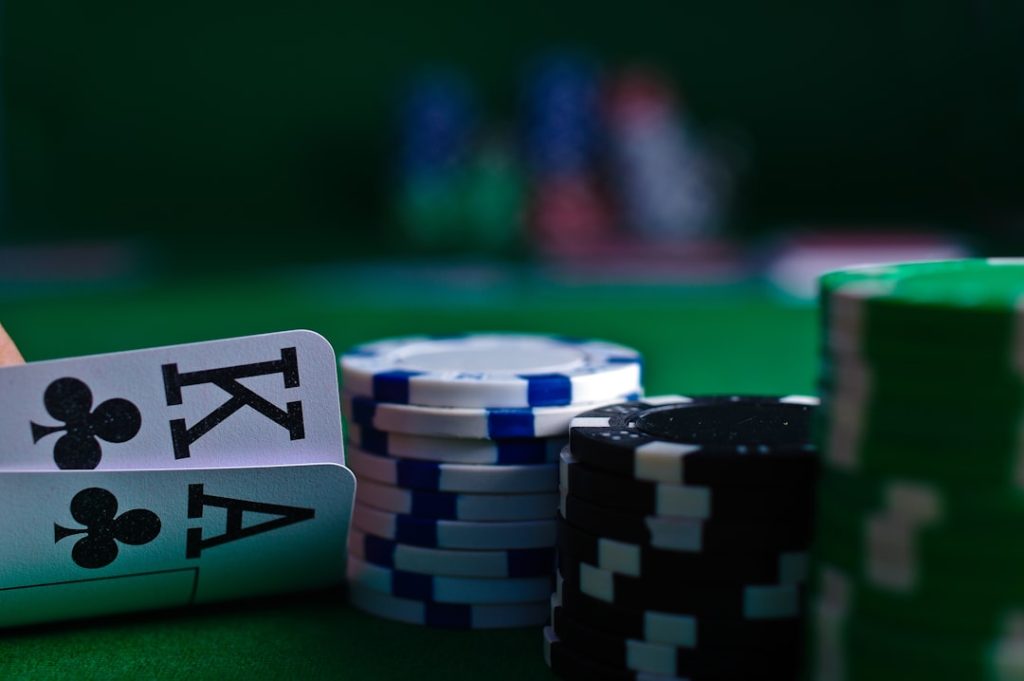
Blackjack commands 31% of all Las Vegas table game revenue and draws 68% of casino visitors to its felt at least once during their stay. These aren’t just impressive statistics—they’re evidence of total market dominance. But how did a French parlor game from the 1700s evolve into the undisputed king of casino tables? The answer lies in a remarkable convergence of mathematical revolution, legendary heists, psychological appeal, and shrewd business logic. From Vingt-et-Un in Parisian salons to Edward Thorp’s computer-proven strategies, from the MIT Blackjack Team’s million-dollar runs to the digital explosion of live dealer streaming, blackjack’s journey reveals why some casino games fade into obscurity while others become cultural institutions.
From French Salons to American Gambling Halls: The Birth of Blackjack
Vingt-et-Un: The French Ancestor
The powdered wigs and crystal chandeliers of 18th-century French casinos witnessed the birth of what would become the world’s most strategic table game. Vingt-et-Un—literally “Twenty-One”—entertained aristocrats in Parisian gambling houses throughout the 1700s, though its rules differed notably from modern blackjack. Only the dealer could double, and betting rounds occurred between cards, making it slower and more methodical than today’s rapid-fire version.
French colonists and emigrants carried the game across the Atlantic, where it landed in New Orleans gambling dens alongside roulette and faro. But Vingt-et-Un struggled for recognition in a frontier America obsessed with poker’s bluffing psychology and craps’ communal energy.
The American Rebrand
The transformation came through marketing genius. When Nevada legalized gambling in 1931, casino operators needed gimmicks to fill their felt-covered tables. Twenty-One languished until someone had a brilliant idea: offer a special 10-to-1 bonus payout for any hand containing the ace of spades paired with a black jack—either the jack of clubs or spades.
The promotion worked. Players flooded tables chasing that lucrative “blackjack” combination. Though casinos eventually scrapped the 10-to-1 bonus as too expensive, the name stuck like a drunk to a slot machine. The standard 3-to-2 payout for any ace-ten combination became the new normal, and what was once a sleepy French card game had an all-American identity.
Still, widespread popularity wouldn’t arrive until the 1960s, when a mathematics professor would publish a book proving the house could actually be beaten.
The 1962 Revolution: How ‘Beat the Dealer’ Changed Everything
Before 1962, blackjack occupied the unglamorous middle tier of casino floor hierarchy. Craps drew the loudest crowds, roulette attracted the sophisticates, and blackjack? It was just another way to lose money, played mostly by casual gamblers killing time between shows. Then a mathematics professor from MIT named Edward O. Thorp published a slim volume that would transform the game forever.
Beat the Dealer hit bookstores with the force of a card counter’s aces. Thorp had done what casino executives insisted was impossible: he’d developed a mathematically proven system showing players could gain a statistical edge over the house. Using IBM computers to run millions of hand simulations, Thorp cracked the code on card counting, demonstrating that tracking the ratio of high cards to low cards remaining in the deck could swing the odds from the casino’s favor to the player’s.
The book became an immediate New York Times bestseller, selling over 700,000 copies in its first year. Suddenly blackjack tables were packed with engineers, accountants, and anyone with enough discipline to learn Thorp’s system. The game’s appeal shifted fundamentally. This wasn’t roulette, where the ball had no memory. This wasn’t slots, where every spin was independent. Blackjack was beatable. Skill actually mattered.
Casino executives panicked. Within months, they responded with countermeasures: introducing multiple decks to dilute the counting advantage, shuffling more frequently, and watching tables with unprecedented scrutiny. The Sands, the Flamingo, and other Strip properties rewrote their blackjack rules almost overnight, some even barring suspected counters outright.
But the damage—or depending on your perspective, the revolution—was complete. Player traffic at blackjack tables tripled between 1962 and 1964. The game that casinos once considered a reliable but unremarkable profit center had become the most scrutinized, strategized, and popular table game in the house.
The Math That Made Blackjack Irresistible
Walk into any casino, and the numbers tell a brutal truth: the house always wins. But blackjack breaks that rule in ways no other table game can match. When four Army mathematicians—Roger Baldwin, Wilbert Cantey, Herbert Maisel, and James McDermott, later known as the Four Horsemen of Aberdeen—published their groundbreaking analysis in 1956, they revealed something casinos hadn’t fully grasped. Played correctly, blackjack offered a house edge so thin it was almost transparent.
The House Edge Advantage
The mathematics separating blackjack from other casino games reads like a player’s manifesto. Consider these numbers:
| Game | House Edge | Player Control |
|---|---|---|
| Blackjack (basic strategy) | 0.5% – 2% | High – decisions matter |
| Roulette (American) | 5.26% | None – pure chance |
| Craps (pass line) | 1.41% | Limited – betting choices only |
| Caribbean Stud Poker | 5.22% | Minimal – one decision point |
| Slots | 2% – 15% | None – programmed outcomes |
That 0.5% edge represents something revolutionary: a casino game where skill directly compresses the house advantage. At a roulette wheel spinning at 5.26%, you’re paying $5.26 for every $100 wagered over time. At a blackjack table with proper play, that same $100 costs you fifty cents to two dollars. The difference funds vacations instead of casino expansions.
Basic Strategy: The Foundation
The Four Horsemen didn’t stop at identifying the edge. They mapped every possible player hand against every dealer upcard, creating basic strategy—a mathematically optimal decision chart that anyone could memorize. Hit on 16 against a dealer’s 10. Stand on 17 against a 6. Double down on 11 against anything but an ace. These weren’t hunches; they were calculations performed on desk calculators over eighteen months.
Card counting, pioneered by Edward Thorp in his 1962 bestseller Beat the Dealer, pushed these numbers further. Skilled counters could shift the edge to negative 1% to 2%—meaning the player, not the house, held the advantage. Suddenly, blackjack wasn’t just beatable in theory. It was a professional opportunity, proven by teams like the MIT Blackjack Team who extracted millions from casinos between 1979 and the early 2000s.
The MIT Blackjack Team: When Math Became Legend
In the early 1980s, a group of students from MIT and Harvard walked into casinos across America carrying something more dangerous than any weapon: statistical precision. Between 1979 and the early 2000s, the MIT Blackjack Team extracted millions of dollars from casino coffers, transforming card counting from a theoretical curiosity into a coordinated assault on the house edge.
The operation ran like a hedge fund. Big Players dressed in expensive suits, playing the high roller while small-stakes spotters at various tables counted cards and signaled when decks ran hot. The team’s sophistication went far beyond basic counting—they employed Kelly Criterion bankroll management, developed intricate hand signals that resembled casual conversation, and rotated members through different casinos to avoid detection. At their peak, they operated with a bankroll exceeding $1 million and recruited members through rigorous training that could last months.
What made the MIT team legendary wasn’t just the money. Former member Jeff Ma (who inspired the character in the book Bringing Down the House) has described how they proved casinos weren’t invincible mathematical fortresses. They demonstrated that disciplined, intelligent play could systematically beat the system. The team’s story exploded into popular culture through Ben Mezrich’s book and the 2008 film “21,” grossing over $157 million worldwide.
The irony? Their success nearly killed the golden goose. Casinos responded with facial recognition software, more frequent shuffling, and continuous shuffle machines. But the damage to the house mystique was permanent. The MIT team showed that blackjack wasn’t just beatable in theory—it was beatable in practice, with real money, by real people using nothing but mathematics and teamwork. That revelation transformed blackjack from another table game into the thinking player’s ultimate challenge.
Simple Rules, Complex Strategy: The Perfect Formula
Walk up to any blackjack table in Las Vegas, Atlantic City, or Monte Carlo, and you’ll witness the game’s genius: a grandmother placing $5 bets sits two seats from a card counter tracking every ten through a six-deck shoe. Both are playing the same game, but they’re experiencing entirely different contests.
Low Barrier to Entry
The core mechanic requires no prior knowledge. Get cards totaling closer to 21 than the dealer without exceeding it. That’s the whole game. A complete novice can sit down, receive two cards, and make their first decision—hit or stand—within thirty seconds. Compare this to craps, where newcomers stand paralyzed by the bewildering array of bets covering the felt, or poker, where you need to understand hand rankings, position, and betting rounds before risking a single chip.
This accessibility explains why approximately 68% of casino visitors play blackjack during their stay. You don’t need to study. You don’t need friends to fill a table. You just need enough money for the minimum bet and a willingness to point at the felt when you want another card.
High Ceiling for Mastery
Yet beneath this simplicity lies mathematical depth that has spawned bestselling books, professional teams, and entire careers. Edward O. Thorp’s 1962 Beat the Dealer proved blackjack could be beaten through card counting, selling over 700,000 copies and transforming the game forever. The MIT Blackjack Team spent decades exploiting this strategic layer, winning millions before casinos caught on.
Basic strategy alone—the mathematically optimal play for every hand combination—reduces the house edge to around 0.5%, the lowest of any table game. Learning it requires memorization and discipline. Mastering card counting demands additional hundreds of hours. This progression from casual fun to serious advantage play creates a unique ecosystem where slot players and math PhDs share the same table, each finding their own level of engagement.
The Digital Explosion: Online and Live Dealer Blackjack
When InterCasino launched the first real-money online blackjack game in 1996, skeptics dismissed it as a gimmick that could never replicate the casino floor experience. Twenty-seven years later, the digital blackjack market tells a different story—one projected to hit $8.9 billion by 2028, growing at 11.5% annually.
The initial wave of online blackjack in the late 1990s and early 2000s solved blackjack’s fundamental accessibility problem. Players no longer needed proximity to Atlantic City or Las Vegas. A factory worker in Ohio could play perfect basic strategy at 3 AM in his kitchen. A college student in Tokyo could practice card counting without risking casino heat. The game that once required travel, dress codes, and minimum table stakes became available to anyone with an internet connection and a $5 bankroll.
But primitive random number generators and static digital cards couldn’t satisfy serious players. The 2006 introduction of live dealer streaming technology changed everything. Evolution Gaming and Playtech pioneered systems where real dealers shuffled physical cards in studio environments, broadcast in real-time to players’ screens. Suddenly the trust factor returned—players could watch every shuffle, every deal, every card extraction from the shoe.
This technological leap unleashed unprecedented variant creation:
- Speed Blackjack (hands dealt every 27 seconds)
- Infinite Blackjack (unlimited players at a single table)
- Free Bet Blackjack (house-funded doubles and splits)
- Blackjack Switch (players control two hands and can swap cards)
- Lightning Blackjack (random multipliers up to 25x)
Over 100 distinct versions now exist across major platforms, each tweaking rules, payouts, and side bets. The digital realm didn’t just preserve blackjack—it turned the game into an innovation laboratory operating around the clock, across every timezone, cementing its position as the undisputed king of casino table games.
Why Casinos Love the Game They Can’t Fully Control
Blackjack generates $1.2 billion annually in Nevada alone, accounting for 31% of all table game revenue in Las Vegas. This seems paradoxical when you consider that skilled players can reduce the house edge to a razor-thin 0.5%, compared to roulette’s comfortable 5.26% cushion. So why do casinos dedicate so much floor space to a game they mathematically can’t dominate?
The Revenue Powerhouse
Volume crushes theory. While blackjack offers the lowest house edge in the casino, the sheer number of hands dealt per hour transforms that slim advantage into a money-printing operation. A full table dealing 60 hands per hour with average bets of $25 generates roughly $450 in theoretical revenue per hour at just a 0.5% edge. Multiply that across dozens of tables running 24/7, and the numbers become staggering.
The game also acts as a traffic generator. Players drawn to blackjack’s favorable odds spend money on slots, restaurants, shows, and hotel rooms. The Bellagio didn’t build its blackjack pit to maximize table game profits—it built it to fill the building with people who have money to spend.
The Strategy Gap
Here’s the casino’s secret weapon: most players are terrible at blackjack. While basic strategy can reduce the house edge to 0.5%, the average player gives back 2-3% through incorrect decisions. Standing on 16 against a dealer’s 7, doubling on 11 against an ace, taking insurance—these mistakes happen at every table, every hour.
Actual card counters represent less than 1% of blackjack players, and casinos can simply bar them from play. The MIT Blackjack Team made headlines precisely because advantage players are so rare. For every skilled counter, thousands of recreational players confidently make mathematically disastrous decisions while believing they’re playing optimally. That gap between perception and reality is worth billions.
Blackjack’s reign as the world’s most popular casino table game isn’t an accident—it’s the inevitable result of a perfect storm. The historical evolution from French salons to Nevada casinos gave it cultural legitimacy. The mathematical revolution sparked by the Four Horsemen and Edward Thorp proved it was beatable, creating an irresistible intellectual challenge. The MIT Blackjack Team’s legendary exploits demonstrated that beating the house wasn’t just theory but achievable reality. And the simple rules paired with strategic depth created a game accessible to grandmothers and math PhDs alike.
The business logic seals the deal. Casinos profit from the gap between perception and execution, while players are drawn by the lowest house edge on the floor and the tantalizing possibility of gaining an actual advantage. As blackjack continues its digital expansion—with live dealer technology bringing the felt to smartphones worldwide and innovative variants multiplying across platforms—the game’s dominance shows no signs of weakening. Whether you’re counting cards in Monte Carlo or tapping “hit” on your phone at midnight, you’re participating in a 300-year evolution that transformed a French parlor game into the undisputed king of casino tables. And that reign is far from over.