


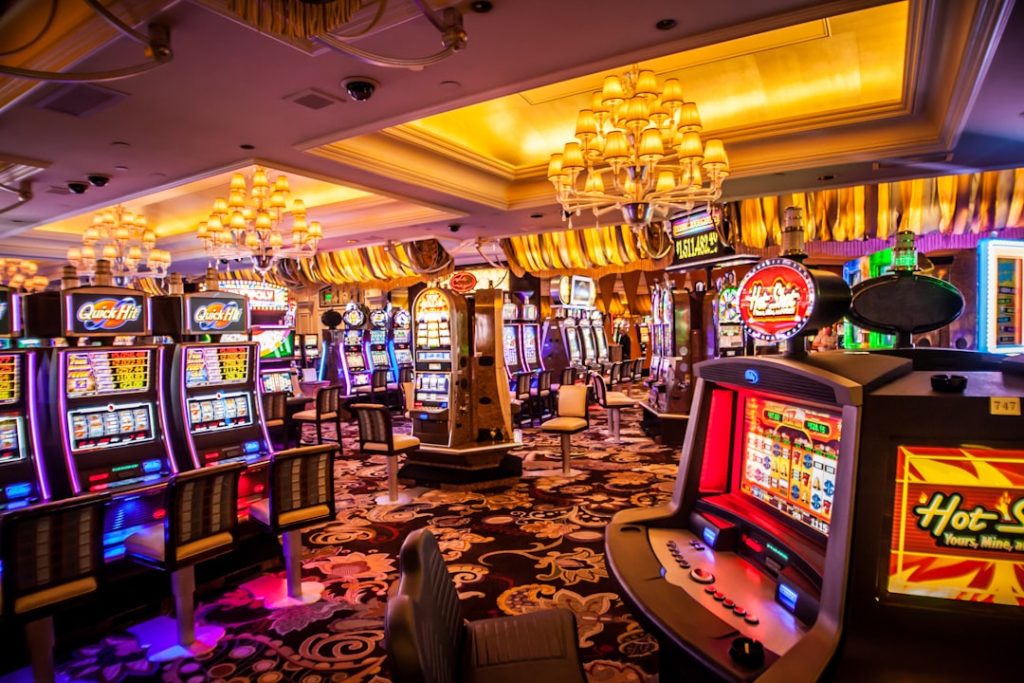
It’s 4 AM, and Linda hasn’t moved from her slot machine in six hours. She’s convinced the jackpot is coming—she can feel it. Two near-misses in the last twenty minutes, the machine is “warming up,” and she’s due for a win. She has no idea what time it is. There are no windows, no clocks, and her phone died three hours ago. Linda isn’t unlucky. She’s experiencing exactly what the casino designed: a psychological laboratory where every detail—from the carpet pattern to the chip weight—is engineered to keep her playing. These aren’t conspiracy theories. They’re documented strategies backed by neuroscience and behavioral psychology, refined across decades and deployed in every major casino worldwide. What follows is your behind-the-scenes tour of how casinos turn human psychology into profit.
The Architecture of Timelessness: How Casino Design Manipulates Your Perception
Walk into the Bellagio at 2 PM on a Tuesday, and you’ll face the same sensory environment as 2 AM on Saturday. The lighting never changes. The ambient hum of slot machines maintains its constant pitch. And you’ll search in vain for any device that tells you what time it is.
The Timeless Trap: No Clocks, No Windows, No Escape
Casino architects learned decades ago that awareness kills action. The moment a player checks their watch and realizes they’ve been at the blackjack table for four hours, rational thought creeps back in. That’s why establishments like the Venetian and MGM Grand built sprawling gaming floors with exactly zero wall clocks and strategically minimal windows. When Steve Wynn designed the original Mirage in 1989, he intentionally created what industry insiders call a “temporal vacuum”—an environment where your circadian rhythm has nothing to anchor to.
The psychology is brutal in its simplicity. Without external time cues, your brain relies on internal estimates, which are notoriously unreliable when you’re experiencing the dopamine fluctuations of gambling. What feels like 45 minutes at the craps table might actually be two and a half hours. By the time fatigue sets in, you’ve already burned through significantly more bankroll than intended.
The Maze Effect: Why You Can’t Find the Exit
Casino floors follow what designers call “playground layouts”—deliberately confusing pathways that curve, dead-end, and loop back on themselves. The Wynn Las Vegas features curved corridors that prevent players from seeing more than 50 feet ahead, ensuring you’ll stumble past dozens of slot machines before finding the restaurant you were looking for.
This isn’t accidental. Gaming floors position their highest-performing machines along these mandatory pathways, particularly near entrances where winning machines create ambient excitement. You’ll notice “loose” slots with frequent small payouts positioned where foot traffic peaks—not out of generosity, but because the sound of jackpots and flashing lights pulls passersby into the gaming area. The actual high-limit rooms with better odds? Those are hidden deep in the maze, accessible only to players already committed to extended sessions.
The Near-Miss Effect: Your Brain on Almost Winning
When two sevens line up perfectly on a slot machine and the third stops one position away from a triple-seven jackpot, your brain fires off nearly identical neural patterns as if you’d actually won. This isn’t an accident of mechanical probability. Slot manufacturers deliberately program these “almost” moments into their games, exploiting a psychological vulnerability that keeps players feeding coins long after rational thinking should have sent them home.
The neurochemistry behind near-misses reveals why they’re so devastatingly effective. Research tracking brain activity during slot play shows that dopamine—the neurotransmitter associated with pleasure and motivation—floods the brain’s reward centers not just during wins, but during those agonizingly close losses. In some players, the dopamine spike from seeing cherry-cherry-lemon actually exceeds the response from smaller actual payouts. Your primitive reward system interprets spatial proximity as meaningful progress, even though each spin operates on independent random number generation where “close” holds zero predictive value.
Studies conducted on regular casino patrons found that 75% experience near-misses as almost equally exciting as genuine wins. This phenomenon creates what psychologists call “the illusion of control”—players develop superstitious beliefs about timing their button presses or sensing when a machine is “ready to hit.” Watch someone play slots for an hour and you’ll hear the telltale language: “I’m getting close,” “It’s warming up,” or “Just one more spin.”
Modern video slots amplify this effect through visual design. Bonus symbols appearing on two of three reels trigger celebratory sounds and animations identical to actual bonus rounds. The screen might even briefly hesitate on that third reel, manufacturing suspense where none mathematically exists. Each programmed near-miss reinforces the dangerous belief that the jackpot isn’t random chance but an achievable skill-based goal just within reach.
Chips, Cash, and Cognitive Distance: The Money Illusion
When Steve Wynn redesigned the Bellagio in 1998, he insisted on custom clay chips with intricate designs and substantial weight. The reasoning wasn’t aesthetic—it was psychological warfare against your wallet. Research consistently shows players bet 50% more with chips than they would with equivalent cash, a phenomenon so reliable that no major casino operates without it.
Why Chips Make You Spend More
The transformation happens the moment you exchange bills for those colorful disks. A $100 bill carries emotional weight—you remember earning it, spending it carefully, protecting it. A black chip simply represents “one betting unit.” This abstraction, what behavioral economists call cognitive distance, severs the psychological connection between the token in your hand and its purchasing power in the real world.
At the Aria in Las Vegas, regulars think nothing of tossing a $25 green chip to a dealer as a tip, yet those same players would hesitate before leaving a $25 bill on a restaurant table. The chip doesn’t feel like money because it exists in a closed economic system where normal value judgments don’t apply. You’re not spending money—you’re playing a game with game pieces.
Player’s Clubs: The Commitment Trap
Modern loyalty programs amplify this distance through multiple layers of abstraction. Your $500 in losses becomes 2,500 tier credits, which sounds like winning. MGM Rewards, Caesars Total Rewards, and similar programs engineer commitment through intermittent reinforcement—research indicates these variable reward schedules increase visit frequency by 40% compared to non-members.
The tier system creates artificial milestones that exploit your desire for status and completion. You’re $300 away from Platinum? That’s not spending—that’s investing in benefits. The points never feel like real money because they can’t be directly converted back to cash, only redeemed for meals, rooms, or more gambling. It’s a closed loop designed to keep your money circulating within the casino ecosystem, always one tier away from truly cashing out.
Sensory Manipulation: Music, Color, and Cocktails
Walk into the Bellagio at 2 a.m., and you’ll notice something peculiar: you feel wide awake despite the hour, your heart rate subtly elevated, and that third martini going down smoother than it should. This isn’t coincidence. Casino operators have spent decades perfecting a sensory cocktail designed to keep you betting longer and faster.
The soundtrack matters more than you’d think. Research shows that ambient music pulsing at 120-130 beats per minute—roughly the tempo of upbeat pop or dance tracks—increases betting speed by 20-30% compared to slower tempos. That’s not background noise; it’s a metronome for your wallet. The Wynn and MGM Grand carefully calibrate their floor music to maintain this sweet spot, matching the rhythm of slot pulls and chip tosses to an invisible conductor.
Color psychology plays an equally calculated role:
- Red lighting and décor dominate casino floors because red increases physiological arousal, elevating heart rate and creating a sense of urgency
- Warm color palettes (reds, oranges, golds) stimulate excitement and risk-taking behavior
- Strategic accent lighting draws players toward high-margin games while keeping exits dimly lit
Those complimentary cocktails? They’re not generosity—they’re strategy. Alcohol impairs judgment and lowers risk assessment, making that $100 bet feel reasonable when sober you would balk. The waitresses circling every twenty minutes aren’t just good service; they’re delivering liquid courage that weakens your mathematical reasoning.
The persistent myth about casinos pumping pure oxygen onto floors is just that—a myth (building codes prohibit it, and it would be a fire hazard). But they do maintain optimal temperature and air circulation to prevent fatigue, keeping you alert enough to make one more bet.
Cognitive Traps: Fallacies That Keep You Playing
Your brain lies to you at the casino, and it does so with remarkable consistency. These cognitive distortions aren’t character flaws—they’re hardwired quirks of human psychology that casinos have spent decades learning to exploit. Understanding these mental traps won’t necessarily stop them from working, but it reveals exactly why that “system” you’ve been using is probably costing you money.
The Gambler’s Fallacy: Why the Wheel Isn’t ‘Due’
In 1913, at the Monte Carlo Casino, black came up 26 consecutive times on a roulette wheel. Gamblers lost millions betting on red, convinced the streak couldn’t possibly continue. Each spin, they reasoned, made red more likely. They were catastrophically wrong.
This is the gambler’s fallacy in its purest form: the belief that independent random events somehow balance out in the short term. The roulette ball has no memory. After ten blacks, the probability of red remains exactly 48.6% (accounting for the zero). Yet this fallacy persists even among experienced players who intellectually know better. Your brain desperately seeks patterns in randomness, manufacturing causation where none exists.
The Illusion of Control: Lucky Charms and Betting Systems
Watch a craps table for ten minutes and you’ll see players blowing on dice, tossing them with specific force, or refusing to let certain people touch them. These rituals create a phantom sense of control over purely random outcomes. The same psychological mechanism drives belief in betting systems like the Martingale, where players double their bet after each loss, convinced they’re managing risk when they’re actually accelerating potential ruin.
Variable ratio reinforcement—the unpredictable reward schedule built into every slot machine and many table games—compounds these illusions. Psychologists have proven this pattern creates the most persistent gambling behavior precisely because you never know when the next win will arrive. Your three losses might precede a jackpot, or they might precede thirty more losses. That uncertainty keeps you feeding the machine even during extended losing streaks, always believing the turnaround is imminent.
The Slot Machine Empire: Why They Dominate Casino Floors
Walk into any major casino in Las Vegas or Atlantic City, and you’ll notice something striking: 70 to 80 percent of the floor space is devoted to slot machines. This isn’t aesthetic preference—it’s pure profit optimization. Slots generate more revenue than all table games combined, and the psychology behind their dominance reveals why they’re the most perfectly engineered gambling product ever created.
The secret weapon is variable ratio reinforcement, the same behavioral principle B.F. Skinner discovered creates behavior most resistant to extinction. Unlike blackjack, where you win or lose on predictable patterns, slots deliver rewards at completely unpredictable intervals. Your brain never knows when the next payout is coming, so it assumes the next spin could be the jackpot. This creates an almost hypnotic engagement that keeps players glued to screens for hours.
The numbers tell the story: casual slot players average 2 to 3 hours per session, while problem gamblers stretch that to 4 to 6 hours. Compare this to table games, where players typically cycle out after 45 minutes to an hour. Slots achieve this through layered psychological manipulation—near-miss programming that triggers the same dopamine response as actual wins, immersive sound effects calibrated to maximize excitement, and rapid play rates that can burn through hundreds of spins per hour.
Modern video slots combine every trick in the casino playbook: the hypnotic effect of spinning reels, the chip abstraction principle (credits feel less real than dollars), sensory overload through lights and music, and bonus rounds that create false perceptions of skill and control. For casinos, slots represent the perfect profit engine—low labor costs, high throughput, and players who willingly feed machines for hours without human interaction.
Protecting Yourself: Recognizing the Tactics
The most powerful weapon against casino psychology isn’t willpower—it’s awareness paired with concrete action. Professional poker players and advantage gamblers know that discipline begins before you ever touch a chip. The difference between a recreational night out and a financial disaster often comes down to systems you put in place before the cocktail waitress takes your first drink order.
Your Pre-Casino Checklist:
- Set absolute limits before crossing the threshold. Decide on both a dollar amount and a time limit. Write them down on your phone. Better yet, tell someone who’s not gambling with you. The MGM Grand has seen countless players turn $200 budgets into ATM marathons simply because they never committed to a hard number before the dopamine started flowing.
- Withdraw cash and leave cards in your hotel safe. When you’re betting with actual bills instead of chips, your brain processes the loss differently. Studies show players using chips bet 50% more than those using cash equivalents. Physical currency creates friction—exactly what you need.
- Set phone alarms every 45 minutes. When that alarm goes off, leave the gaming floor entirely. Walk outside. Check your phone. The timeless casino environment is designed to make three hours feel like thirty minutes. At the Bellagio, you can walk to the conservatory. At the Wynn, hit the retail corridor. Breaking the spell matters more than where you go.
- Learn to spot the gambler’s fallacy in real-time. That roulette wheel showing five blacks in a row? It has zero bearing on the next spin. Each outcome carries the same 47.37% chance (on a double-zero wheel). When you catch yourself thinking “it’s due,” you’re experiencing the exact cognitive bias casinos profit from.
- Recognize near-misses for what they are—losses. Slot machines showing two cherries and a blank aren’t “almost wins.” They’re programmed failures designed to trigger the same neural response as actual victories. Seventy-five percent of players experience near-misses as exciting as wins, but your bankroll knows better.
The House’s Psychological Edge
Casinos are engineered environments where architecture, neuroscience, and behavioral psychology converge to maximize gambling duration. The timeless maze that disorients you, the chips that make money feel abstract, the near-misses that flood your brain with dopamine, the sensory manipulation that keeps you alert and impulsive—these aren’t accidents. They’re deliberate strategies refined over decades by an industry that has invested billions into understanding exactly how your mind works and where it’s vulnerable.
The house edge isn’t just mathematical. It’s psychological. Every design choice, every programmed sound effect, every complimentary drink represents a calculated assault on your rational decision-making. But here’s the empowering truth: gambling can be entertainment when approached with awareness and discipline. Set your limits before you walk through those doors. Recognize the tactics as they’re deployed against you. Break the timeless spell with regular reality checks.
Next time you walk into a casino, you’ll see it differently—not just as a playground, but as a carefully designed psychological experiment where you’re the subject. The question isn’t whether the casino will try to keep you gambling longer. The question is whether you’ll let them. Understanding these tactics is the first step to maintaining control. The rest is up to you.